
Lake Como wins on prestige, drama, and historic grandeur. Lake Garda wins on space, value, accessibility, and family life. For American buyers weighing a property purchase in northern Italy, that single sentence covers most of the decision. Lake Como suits buyers chasing a trophy address with cinematic scenery and don’t flinch at top-of-market prices or high maintenance costs. Lake Garda suits buyers who want a livable, active property that works year-round, earns consistent rental income, and doesn’t punish you every time you fly in from the US.
Quick verdict by buyer profile:
- Prestige and luxury seekers: Lake Como, historic villas, Bellagio address, Michelin dining
- Active families: Lake Garda, beaches, watersports, Gardaland, flat waterfront towns
- Value-driven investors: Lake Garda, friendlier entry prices, steadier rental demand
- Romantic retreats and couples: Lake Como, dramatic scenery, intimate towns, villa gardens
- Frequent visitors from the US: Lake Garda, Verona airport sits roughly 15 km from the eastern shore
Livingitaly works with American buyers at both lakes and sees the same pattern repeatedly: buyers who choose based on Instagram aesthetics rather than ownership reality often end up on the wrong lake for their actual lifestyle.
How Lake Garda and Lake Como actually differ on the ground
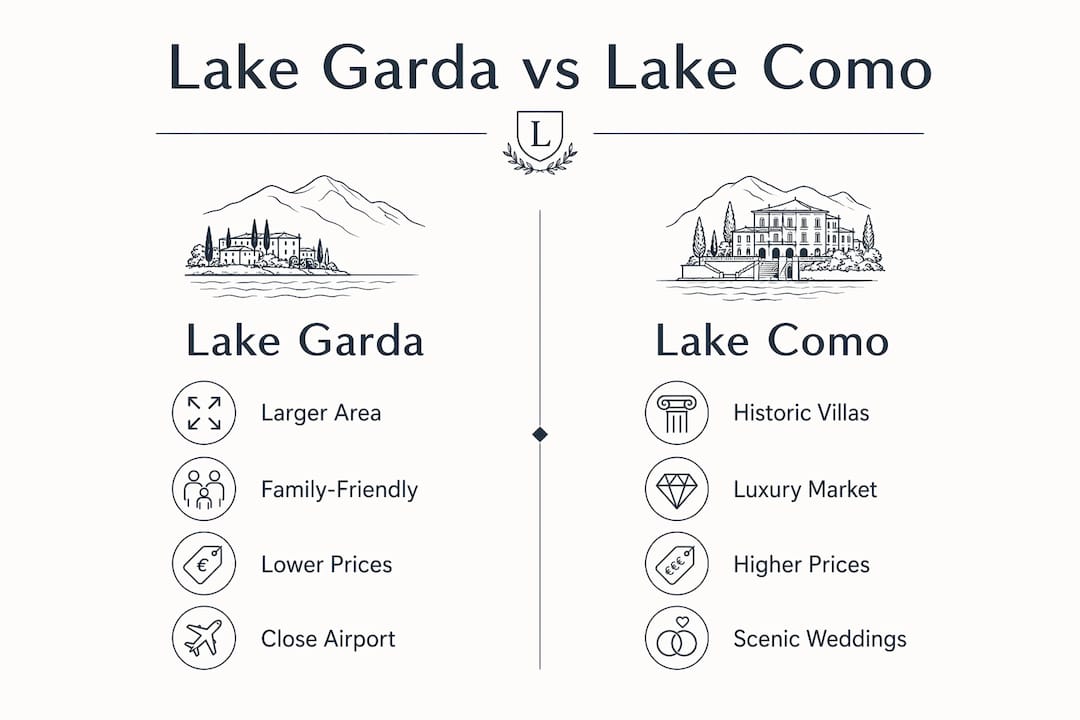
Lake Garda covers approximately 370 km², more than twice the size of Lake Como at roughly 146 km². That size difference shapes everything from crowd levels to property availability to how a week actually feels.
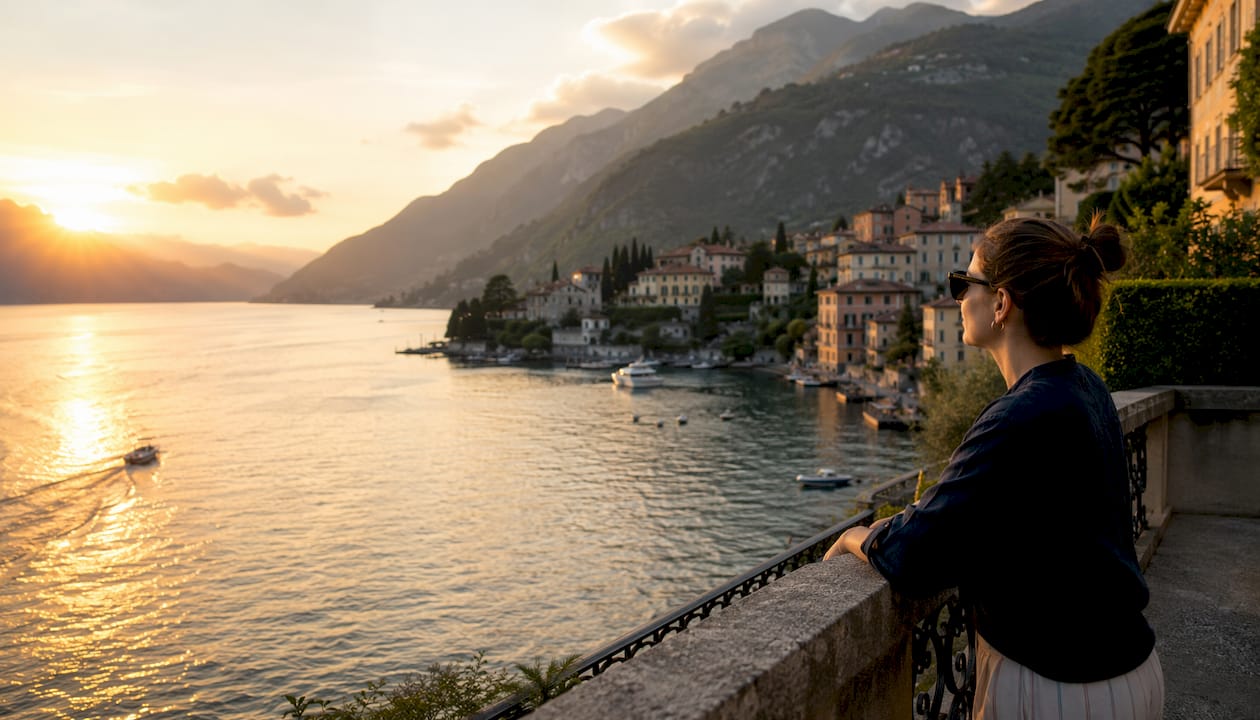
Garda’s geography shifts dramatically from north to south. The northern end around Riva del Garda and Malcesine is alpine, windy, and built for watersports. The southern shore near Sirmione and Desenzano feels almost Mediterranean, with olive groves, vineyards, and flat waterfront promenades that work well for families with strollers. Como, by contrast, is steep and concentrated. Mountains drop almost directly into the water, towns cling to near-vertical hillsides, and the shoreline offers limited flat access.
Lake Como suits romantic breaks, destination weddings, and couples; Lake Garda suits families, active travelers, and buyers who want more room. Garda’s size absorbs summer crowds far better. Bellagio on Como fills up by noon in July and August, while Garda’s larger shore spreads visitors across dozens of towns.
Climate is similar at both lakes, though Garda runs slightly warmer year-round. Como’s higher elevation and steeper terrain create a more alpine microclimate, with cooler evenings even in summer. For a property you plan to use from April through October, both lakes deliver. For winter visits, Garda’s milder temperatures give it a practical edge.
Accessibility is where Garda pulls clearly ahead for American buyers. Verona Villafranca airport sits about 15 km from Garda’s eastern shore, making transfers short and simple. Como’s gateways are Milan Malpensa, Linate, and Bergamo, all 50–60 km away and one to two hours by road in summer traffic. For buyers flying in from New York or Los Angeles several times a year, that difference compounds fast.
What the real estate markets at each lake actually look like
Lake Como’s property market is defined by historic grand villas. These are beautiful, prestigious, and expensive to own. Como villas are mostly historic with high maintenance and strict preservation regulations; restoration work requires approvals that can take years, and upkeep costs run well above what buyers typically budget. The shoreline is tight and steep, which limits the number of properties with genuine flat water access.
Lake Garda’s market is newer, more varied, and more practical. Garda real estate tends to be newer with family-oriented amenities like pools and dawned areas, and renovation projects move through permitting more smoothly. You get more property for your money, and the ongoing management burden is lower.
On pricing, the gap is real. Lake Como prices are significantly higher; Garda offers rates often near half the cost for comparable villas. Published weekly rental benchmarks illustrate the spread:
| Property size | Lake Como (weekly) | Lake Garda (weekly) |
|---|---|---|
| large villa | high rental income | consistent rental income |
| large villa | higher rental rates | steady rental demand |
| very large estate | top-tier rental income | mid-tier rental income |
Source: villasforkings.com. Rates are villa-only before staff and transfers. Italy applies a per-person, per-night tourist tax that varies by municipality.
For buyers considering investment property in Italy, the purchase price differential between the two lakes is substantial. Como commands a prestige premium at every band. Garda’s larger and more modern supply means more options at more accessible price points, with lower carrying costs once you own.
Local amenities also differ. Garda’s towns like Desenzano, Lazise, and Bardolino have supermarkets, schools, medical facilities, and year-round services that support full-time or extended residency. Como’s most photogenic towns, Bellagio and Varenna, are geared toward tourism and can feel thin on practical services outside peak season.
Investment returns and rental potential: which lake performs better?
Lake Como commands higher rental rates for luxury short-term stays; the celebrity association and historic villa stock drive peak-season demand from high-net-worth renters willing to pay for the address. August premiums on Como run 30–60% above base rates. The catch is that demand concentrates heavily in July and August, with shoulder seasons softer than Garda’s.
The rental market at Lake Como favors short-term luxury lets with seasonal peaks, whereas Lake Garda offers more balanced rental demand with family appeal and consistent occupancy. For an investor who needs predictable cash flow across a longer season, Garda’s steadier demand profile is easier to underwrite.
The arrival advantage matters for rental performance too. The short Verona transfer is frequently underestimated but crucial for frequent visitors and renters. Renters booking a family week are more likely to choose a property with a 20-minute airport transfer over one requiring a 90-minute drive through Milan traffic. That friction affects occupancy rates in ways that don’t show up in headline rental figures.
Buyers often overlook that the historic villa premium at Lake Como carries hidden costs in upkeep that affect long-term ownership experience. Preservation rules restrict what you can change, specialist contractors are expensive, and the timeline for any significant work is unpredictable. For American buyers accustomed to straightforward renovation projects, this is a real operational difference.
For buyers focused on Italian real estate investment strategy, Garda typically offers a cleaner investment case: lower entry cost, lower maintenance burden, broader rental demand, and simpler logistics. Como offers higher ceiling rates but a narrower demand window and higher carrying costs.
How to choose between Lake Garda and Lake Como for your purchase
The most common mistake American buyers make is choosing a lake based on prestige rather than fit. International buyers frequently overvalue Lake Como’s prestige when Lake Garda better fits active family lifestyles and easier maintenance. Paying the historic villa premium for a property your family uses as a beach base is a mismatch that shows up in both enjoyment and returns.
Work through these questions before committing:
- How often will you visit? If you’re flying from the US four or more times a year, Garda’s Verona connection saves you hours per trip.
- Who travels with you? Families with children under 12 will find Garda’s flat waterfront towns, beaches, and theme parks far more practical than Como’s steep staircase streets.
- What’s your renovation appetite? Historic Como villas require patience with Italian preservation bureaucracy. Garda properties are generally easier to update and manage.
- What’s your rental strategy? Peak-season luxury lets favor Como. Year-round family rental demand favors Garda.
- What’s your budget ceiling? Como’s entry point for a quality lakefront property is substantially higher, and the ongoing costs follow.
Pro Tip: Before you visit either lake, do a test run of the arrival experience. Fly into Verona, drive to a Garda property, and note the total door-to-door time. Then repeat from Milan Malpensa to a Como town. That lived experience tells you more about long-term ownership convenience than any comparison article.
For buyers navigating Italian property acquisition for the first time, the legal and tax framework adds another layer. Italy’s property taxes, notary fees, and residency rules apply at both lakes, but the specific obligations vary by property type, buyer status, and intended use. Livingitaly’s buyer advisory service covers due diligence, tax planning, and legal structuring from the first property search through closing and beyond.
Key Takeaways
Lake Garda delivers better value, accessibility, and year-round livability for most American buyers, while Lake Como remains the right choice for buyers who specifically want historic prestige and are prepared to pay for it.
| Point | Details |
|---|---|
| Size and geography | Lake Garda covers roughly 370 km²; Lake Como covers roughly 146 km², with steeper, more restricted shorelines. |
| Accessibility from the US | Verona airport sits about 15 km from Lake Garda; Como requires 1–2 hour transfers from Milan airports. |
| Property prices | Lake Garda villa rates run roughly half of comparable Lake Como properties at every size band. |
| Rental demand profile | Lake Como peaks sharply in July and August; Lake Garda offers steadier family-oriented demand across a longer season. |
| Best buyer fit | Como suits prestige and luxury buyers; Garda suits active families, frequent visitors, and value-focused investors. |