
Yes, you can buy a house in Tuscany right now, and the fastest, most reliable path is pairing your own portal search with a buyer’s-side advisor who handles due diligence, negotiation, and the paperwork. Going fully DIY is possible, but it usually means a longer timeline and more exposure to title or zoning problems that only surface after you’ve made an offer.
Tuscany’s regional average sits near 2,413 €/m², but provincial prices swing wildly, from luxury Florence addresses to far more affordable inland towns. That spread is exactly why a scattershot search wastes time.
Start here:
- Set price alerts on two or three listing portals covering your target province.
- Contact a buyer’s advocate before you fall in love with a listing, not after.
- Book a shortlist visit trip once you’ve narrowed to 3 to 5 real candidates.
Key Takeaways
Buying a house in Tuscany successfully depends on matching your zone to your goal, budgeting for the full closing cost stack, and verifying title and zoning before you sign the compromesso.
| Point | Details |
|---|---|
| Prices vary sharply by province | Florence averages near 4,505 €/m² versus roughly 1,684 €/m² in Arezzo. |
| Match zone to goal | Coastal towns suit rental income; Chianti and Val d’Orcia suit lifestyle buyers; Maremma and Arezzo suit tighter budgets. |
| Budget beyond the sale price | Registration tax, notary fees, agency commission, and surveys typically add several percentage points to the purchase price. |
| Casali carry hidden costs | Seismic upgrades and landscape restrictions can significantly raise restoration scope and timeline. |
| Consider buyer-side advisory | Living Italy manages property finding, due diligence, negotiation, and renovation oversight for international buyers. |
Table of Contents
- Comprare Casa Toscana: Current Prices by Province
- Which Tuscan Zones Fit Your Goals?
- Where Should You Search for Listings?
- What Are the Steps to Buy a House in Italy?
- What Should You Know Before Buying a Casale?
- How Do Mortgages and Taxes Work for Buyers in Tuscany?
- Where the Real Opportunities Are in Tuscany
- How Living Italy Helps You Buy With Less Risk
- Sources
- FAQ
Comprare Casa Toscana: Current Prices by Province
Provincial averages tell you more than any single Tuscany-wide number. Buyers who anchor their budget to the regional average alone often get blindsided by what a comparable property actually costs in Chianti versus the coast.
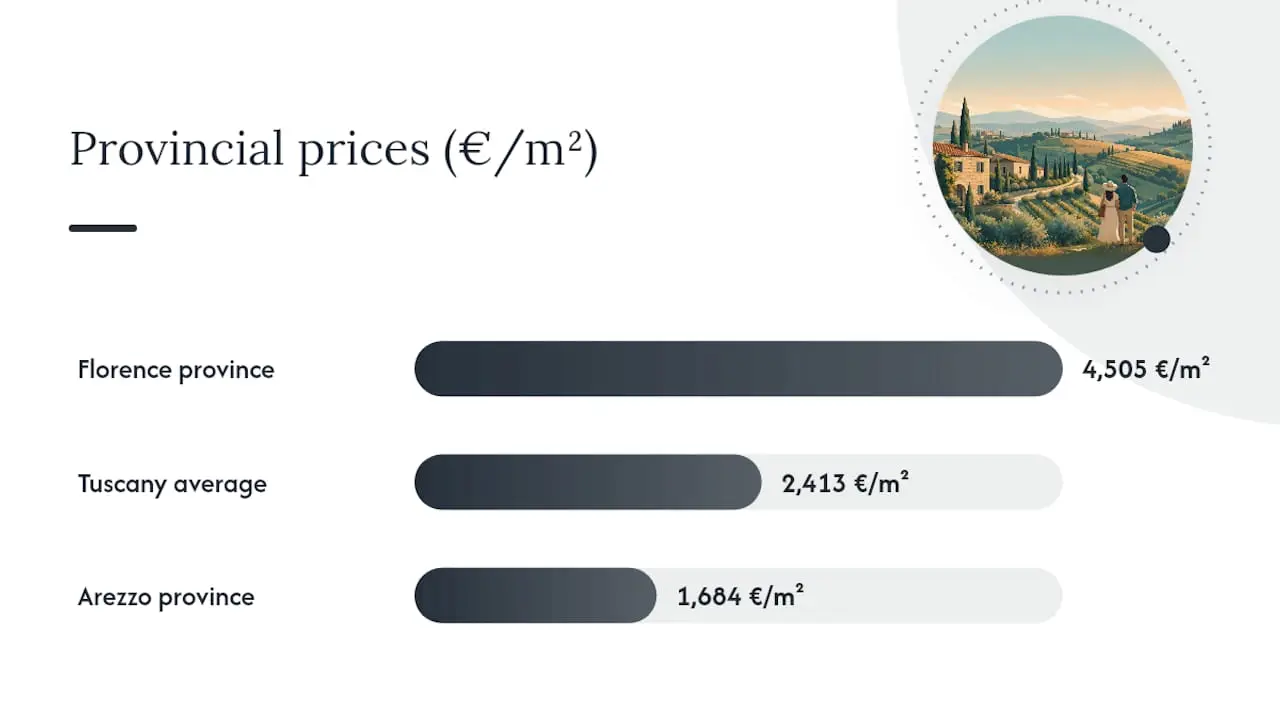
July 2025 data puts Florence province near 4,505 €/m², while Arezzo sits closer to 1,684 €/m². That’s nearly a threefold gap within the same region, and it explains why “comprare casa in Toscana” means something completely different depending on which province you’re actually targeting.
The regional average of roughly 2,413 €/m²] has climbed on recent quarterly growth, with the increase concentrated in Florence, Lucca, and Prato rather than spread evenly across the region.
Three forces drive that dispersion. Tourism pumps a premium into anywhere within striking distance of Florence or the coast. Inland provinces without a big-name draw stay cheaper simply because demand is thinner. And Florence itself keeps pulling prices upward across its whole province, not just within the city walls, as buyers priced out of the historic center push into surrounding towns.
Which Tuscan Zones Fit Your Goals?
Where you buy should follow what you actually want out of the property, not just where prices look attractive on a spreadsheet.
- Florence and Lucca command a premium and reward buyers chasing long-term appreciation or a walkable, culturally rich permanent base.
- Chianti and Val d’Orcia suit lifestyle buyers and luxury second-home seekers who want vineyard views and don’t mind paying for them.
- Maremma offers more competitive pricing for buyers willing to trade some polish for space and value, and it works well for a renovation project.
- Coastal towns along the Tyrrhenian see strong seasonal rental demand, making them a solid pick for anyone investing in Tuscany real estate with short-term rental income in mind.
- Inland provinces like Arezzo and parts of Grosseto remain the most affordable entry points for buyers prioritizing budget over brand-name location.
Before committing to any zone, check road and rail access, how seasonal the local economy is, and whether infrastructure like broadband and healthcare keeps up with year-round living, not just August tourist traffic.
Where Should You Search for Listings?
Your search strategy matters as much as your budget. Different portals surface different slices of the market, and knowing which one to check first saves real time.
- Idealista carries one of the largest Tuscany listing volumes online, making it the strongest first stop for gauging overall supply and price ranges.
- Immobiliare.it tends to surface strong local agent listings and is worth cross-checking against Idealista for properties that haven’t hit both platforms yet.
- Casa.it shows the market’s full segmentation, from sub-€200,000 apartments to multi-million-euro villas, useful for calibrating what your budget actually buys.
- Local agencies often list properties before they reach the major portals, particularly in smaller inland towns.
Pro Tip: Set saved searches with translated Italian terms like “casale,” “rustico,” and “da ristrutturare,” since English-only filters miss a large share of rural listings.
Watch for red flags: listings with no cadastral reference, vague or absent energy certification, suspiciously generic photos, or a title history that the agent won’t clarify upfront. Portal listings are a starting point, not a verification, and often omit the complex vincolo or title details that only a professional check will catch.
What Are the Steps to Buy a House in Italy?
Italy’s purchase process runs through three defined stages, each with real legal weight.
- Proposta d’acquisto (purchase proposal): You submit a formal offer, often with a small deposit. Typically resolved in days once accepted.
- Compromesso (preliminary contract): Both parties sign a binding agreement with a larger deposit, usually 10 to 20% of the price. This stage generally runs 30 to 90 days while due diligence completes.
- Rogito (final deed): Signed before a notary, who registers the transfer. This closes the sale and typically happens 60 to 120 days after the initial offer, depending on financing and survey timelines.
| Cost Item | Typical Range |
|---|---|
| Registration tax (imposta di registro, resale) | 2% to 9% of cadastral value |
| VAT (new builds only) | 4% depending on buyer status |
| Notary fees | 1% to 2% of purchase price |
| Agency commission | 2% to 4% per side |
| Technical surveys / due diligence | Varies by property complexity |
Before signing anything, run through a due-diligence checklist: verify the title chain, confirm cadastral records match the physical property, check for zoning restrictions or vincoli, and request the energy performance certificate. Skipping any one of these is how buyers end up owning a legal headache instead of a holiday home.
What Should You Know Before Buying a Casale?
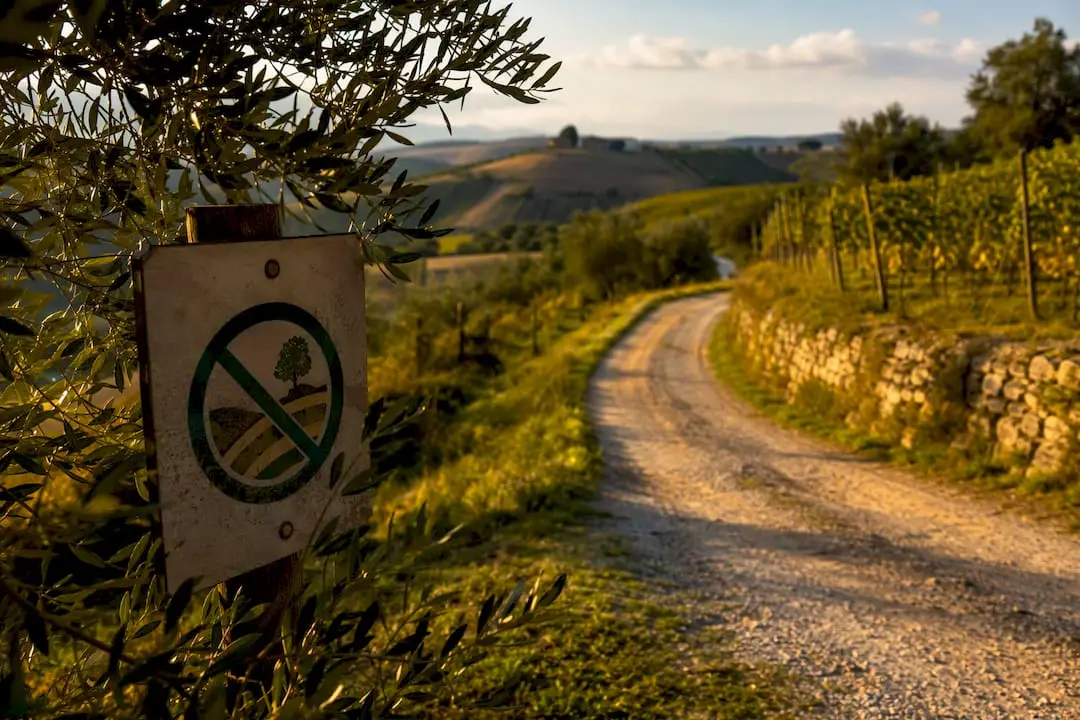
A charming stone casale looks simple until the survey comes back. Structural repairs, mandatory seismic upgrades, specialty materials matched to historic facades, and permit delays can all stack up fast, and historic rural properties frequently sit inside landscape-protected zones that restrict exterior changes like pools, extensions, or new windows.
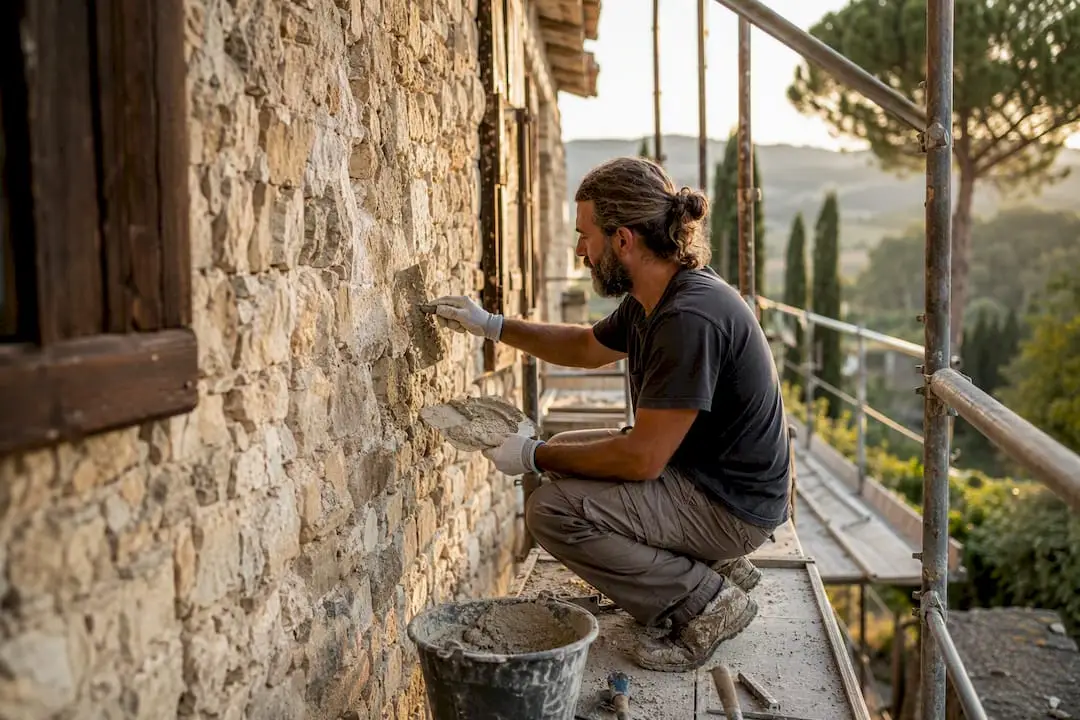
Pro Tip: Hire a local project manager or conservator before you finalize the purchase, not after. Protected-zone restrictions can quietly kill a renovation plan you’ve already budgeted around.
A realistic workflow looks like this:
- Purchase completes at the rogito.
- Technical surveys identify structural and seismic needs.
- Permits get filed with the local comune and, where applicable, the landscape authority.
- A project manager oversees restoration against the approved scope.
Buying a casale in Tuscany can deliver both lifestyle payoff and long-term value, but it rewards buyers who treat renovation as active management rather than a one-time transaction.
How Do Mortgages and Taxes Work for Buyers in Tuscany?
Banks in Italy typically request a standard document set regardless of residency status:
- Valid ID and passport
- Proof of income (payslips or tax returns)
- Bank statements from the past several months
- Proof of residency status, where applicable, for non-residents
Expect these taxes to apply depending on your situation:
- Imposta di registro applies to resale properties, generally at a lower rate for a primary residence than for a second home.
- VAT replaces registration tax on new builds, with the rate depending on buyer status.
- IMU (municipal property tax) applies annually, though primary residences often qualify for exemptions.
- Renovation incentives exist periodically at the national or regional level, but eligibility rules shift year to year.
Pro Tip: Confirm current incentive rules and rates with a tax advisor before finalizing a renovation budget. Rules change often enough that last year’s numbers can mislead this year’s plan.
Where the Real Opportunities Are in Tuscany
We see buyers repeatedly chase the same three towns while overlooking provinces where €/m² is a third of the price and infrastructure is just as solid. The best Tuscany purchases usually come from clients who let accessibility and actual use, not name recognition, drive the location choice.
Clients who bring in buyer-side advisory early tend to skip the costly surprises. One family targeting a Val d’Orcia casale avoided a stalled purchase entirely once due diligence flagged a landscape restriction the listing never mentioned.
How Living Italy Helps You Buy With Less Risk
Idealista, Immobiliare.it, and Casa.it will show you what’s on the market. What they won’t do is verify a title, negotiate on your behalf, or tell you a listing sits inside a protected zone before you’ve fallen in love with it. That gap is where Living Italy’s buyer-side advisory earns its place.
The service covers property finding matched to your actual goals, legal due diligence, negotiation, tax and legal coordination, renovation project management for casali, and long-term property management once the deed is signed. Clients get one point of contact managing every stage instead of juggling an agent, a notary, and a translator on their own. If Tuscany specifically is your focus, the Living Tuscany advisory page outlines region-specific services and typical engagement steps.
This is advisory support, not a substitute for independent legal or tax counsel. If you’re ready to move past browsing listings, request a consultation or a curated property shortlist and see what a managed search actually looks like.
Sources
- Comprare casa usata in Toscana: i prezzi al mq
- Case, Toscana — idealista, N.1 in Italia
- Casa
- Buying property in Italy as an American
FAQ
Where Is It Best to Buy a House in Tuscany?
It depends on your goal: Florence and Lucca suit long-term value and city living, Chianti and Val d’Orcia suit lifestyle buyers, and Maremma or Arezzo offer the most affordable entry points.
Is There a €30,000 Home Bonus in Tuscany?
Renovation incentives exist periodically at the national and regional level, but exact amounts and eligibility shift year to year, so confirm current figures with a tax advisor before budgeting around any specific bonus.
Which Italian City Is Best to Buy a House In?
There’s no single answer. It depends on whether you’re prioritizing rental yield, lifestyle, or affordability, and Tuscany itself spans that entire range from Florence to Arezzo.
Which Italian Region Has the Cheapest Houses?
Southern regions generally post lower averages than Tuscany, but within Tuscany itself, inland provinces like Arezzo offer meaningfully lower prices than Florence or Lucca.
Should I Use a Buyer’s Advocate or Search on My Own?
A DIY search works for straightforward, well-documented properties, but a buyer’s advocate is worth it once you’re dealing with historic properties, protected zones, or unfamiliarity with Italian contract stages.